

Please Explain Score Choice

Score Choice allows the student to forward the scores they choose to the colleges or universities they are applying to.  So what does a student need to know about this policy?

Here are some items to think about: SAT Reasoning and Subject test scores can be submitted by test date. If a student does not choose Score Choice, all scores will be sent to the college. Score Choice is optional. Students should follow the score-reporting requirements of the colleges they are applying to. Colleges will only receive the scores that the student sends to them. Individual sections of a specific test date cannot be selected—only the entire test of the particular SAT will be sent. It does not cost more to send one or multiple copies or all test scores to a college. Scores can be sent by paper, CD, or Electronic Score Reports.  If the student requests a second report to a college, the report will only include the unique set of scores chosen by the student, which may or may not include previous test scores.

For more information, check with the College Board.

Admissions Representative Visit with Students

College admissions representatives begin their fall visits in August and conclude sometime in November. Your high school counselor is probably busy scheduling these visits right now. The representatives share information with prospective applicants and allow students time to ask pertinent questions about the search and application process.  This is a great time for seniors and juniors, who are interested in gathering data, to meet the representatives face-to-face.  The admissions officer may be the one who will eventually read your college application.

Here’s a list of places you may be able to meet with admissions representatives:

It’s College Application Time – Begin by Getting Organized!

Seniors – it’s that time of year. Summer has come and gone and you are about to embark the college application process. So where do you begin?  First of all, start early! Give yourself plenty of time to produce a stellar final product. You want a winning application, not one that looks hurried and rushed. Remember, there are plenty of people who can help you with the process including your parents, your school counselors, mentors, and teachers.

Have the following pieces of information on hand before you start to fill out your application. It’s not a bad idea to save this information on a card or in a computer file.  This information will be used over and over again in each application you complete. Click here to read list of items.

Important Financial Aid Forms for College Bound Students

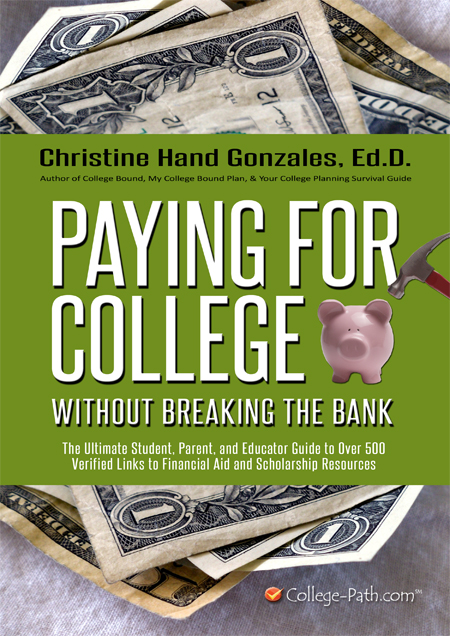
How do colleges calculate financial aid awards for students who have applied to their institution?  Each college has its own set of requirements so the student should be sure to check with the financial aid offices of the schools.  Along with forms that may be required, there are important deadlines to follow too.  Paying For College CoverRemember to apply for additional financial aid from your state government and outside scholarships.
Here are financial aid applications you may have to complete:

FAFSA (Free Application for Federal Student Aid) – a federal financial aid application form required by all colleges for federal financial aid including grants, loans, and work/study. In addition, some colleges use the FAFSA to award money from its own endowment funds and others require additional forms.

Verification Worksheet is to be completed if a student’s FAFSA was selected for review by the college.

State – Visit your state’s department of education site for information on state-sponsor on state financial aid programs for state residents.

Institutional – Email colleges on your list for additional institutional forms that the school may require before awarding money from its own endowment funds for financial aid.. Click here to read more!

10 Ways to Start Saving for Your College Education

There are multiple ways to prepare to start saving for your college education.

1.  A 529 Plan is a state-sponsored program designed to help parents finance education expenses. They are administered by certain investment companies and subject to contribution requirements and guidelines. Withdrawals from the account are taxed at the child’s tax rate, and anyone can contribute to a Section 529 plan, regardless of their income level. In most cases, the money is invested in a portfolio of stocks, bonds, or mutual funds. The proceeds can be used only for education withdrawals for non-educational purposes trigger taxes and a 10% penalty. The investment company administering the account will be in control of how the money is invested, and will charge an ongoing fee for its services. Read 9 more ways to save for college.

How to Email a College Admissions Counselor

Check Your Email Address First!

Yes, you were given a formal name at birth and you may be a creative individual who wants to express yourself with a unique email address, but suddenly you realize [email protected] might not be the most appropriate email address to use. Who is your audience? What impression will you leave on the admissions officer?  Every bit of information you reveal tells the college admissions office something about you. I often ask students to think about how their grandparents might react to the address. It may be safer and more appropriate to use your school email address or create one that will be used for all your college correspondence. Read more on clues on emailing your the college admissions counselor.

What Is The CSS Profile?

Some participating institutions use the CSS Profile in addition to other forms such as the FAFSA to determine a financial aid package for students applying to their school.

The College Board notes the following information about the Profile:

WHAT is the PROFILE? The PROFILE is an online application that collects information used by certain colleges and scholarship programs to award institutional aid funds. (All federal funds are awarded based on the FAFSA, available after Jan. 1 at http://www.fafsa.ed.gov.  Some colleges may require additional information, such as tax returns or an institutional application. If your parents are divorced, some colleges will also require your noncustodial parent to complete the Noncustodial PROFILE. Continue reading What Is The CSS Profile?

Start Your New Year Right! College Bound Now Available in eBook on Amazon!

It’s here! Over 1,200 active links now available in College Bound!

I wrote “College Bound: Proven Ways to Plan and Prepare for Getting Into the College of Your Dreams” as a guide to help parents and students prepare for what comes after graduation. “College Bound” is written so it will be like having a professional college counselor beside you every step of the way.

College Bound” guides you through the college planning timeline, the search and application process, and campus visits, with additional tips and resources. It will show ways to approach counselors, teachers, or moderators to request an effective letter of recommendation, give tips on self-marketing through the essay, provide suggestions for a top-notch resume of extracurricular activities, and offer advice for taking standardized tests.

  • If you are a budding artist, a competitive athlete, or interested in a military career, or transitioning from being homeschooled to college, this book is for you.
  • If you have special needs or a disability, this book is for you.
  • If you are thinking about learning a trade or attending community college, this book is for you.
  • Interested in understanding the “nuts and bolts” of financial aid and where to find scholarships? This book is for you.
  • Looking for an extensive list of publications and internet resources that is beyond compare? “College Bound” is for you – giving you all these resources and more.
  • I hope you will find this must-read guide helpful and informative, and I wish you all the best as you plan a path to an exciting future.

I hope you find it helpful! Want the companion workbook, check out “My College Bound Plan“!

Other books available to help you with the college planning process include:  A Book of Questions to Jumpstart Your Career Search; Your College Planning Survival Guide – Tips from Students, Parents and Professional Who Made it Through; Paying for Collge Without Breaking the Bank — The Ultimate Student, Parent and Educator Guide to Over 500 Verified Links to Financial Aid and Scholarhip Resources; and How to Impress Your Instructor Online:  Quick Tips to Success for the Virtual Student