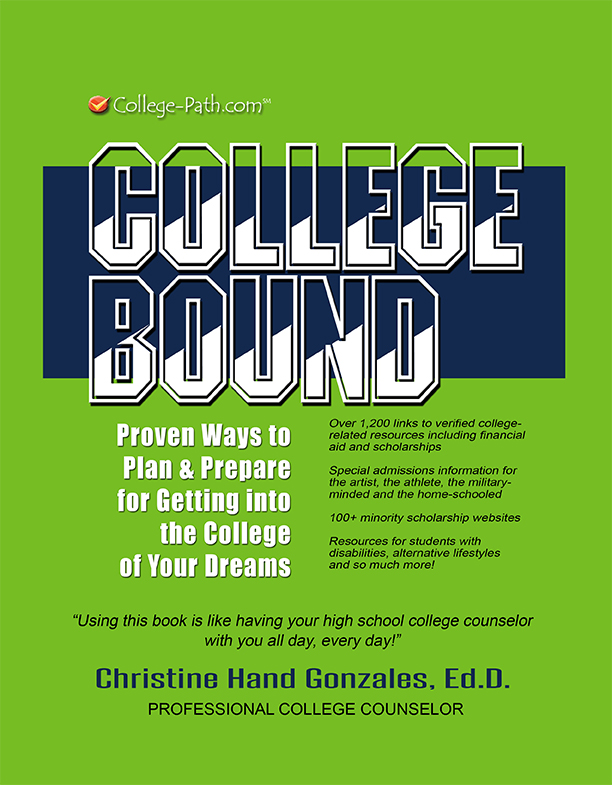
 It’s that time of year where students, parents, and educators stock their shelves with college planning tools. Dr. Christine Hand Gonzales has written several books you may find helpful to you in the college search and application process, as well as the financial planning and scholarship search.
Top recommendations include College Bound: Proven Ways to Plan and Prepare For Getting Into the College Of Your Dreams,the companion workbook, My College Bound Plan, Your College Planning Survival Guide: Smart Tips From Students, Parents and Professionals Who Made It Through, and Paying for College Without Breaking the Bank: The Ultimate Students, Parent and Educator Guide to Over 500 Financial Aid and Scholarship Resources (http://tinyurl.com/l7ofafs)- Read more about book choices – click here.
“College Bound” and the companion workbook, “My College Bound Plan” guides you through the college planning timeline, the search and application process, and campus visits, with additional tips and resources. It will show ways to approach counselors, teachers, or moderators to request an effective letter of recommendation, give tips 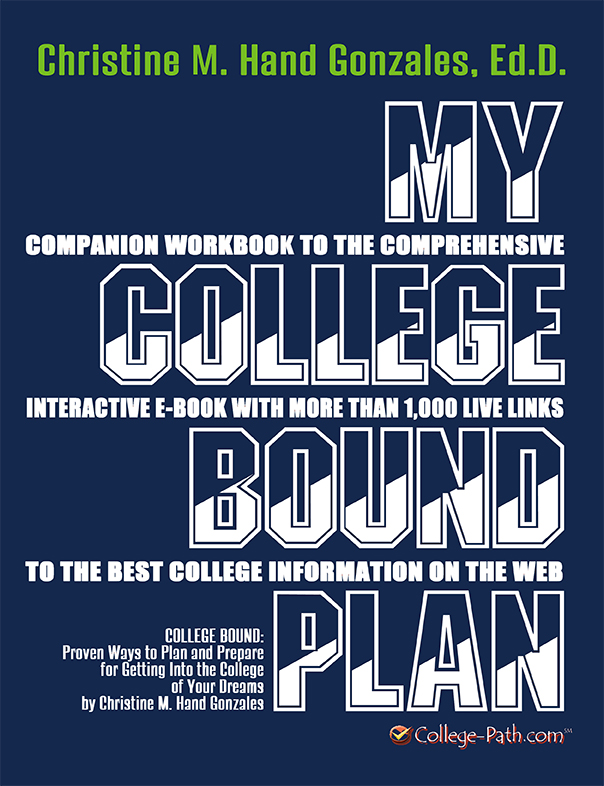 on self-marketing through the college essay, provide suggestions for a top-notch resume of extracurricular activities, and offer advice for taking standardized tests. If you are a budding artist, a competitive athlete, or interested in a military career, or transitioning from being home-schooled to college, this book is for you. If you have special needs or a disability, this book is for you. If you are thinking about learning a trade or attending community college, this book is for you. Interested in understanding the “nuts and bolts” of financial aid and where to find scholarships? This book is for you. Looking for an extensive list of publications and internet resources that is beyond compare? “College Bound” is for you – giving you all these resources and more.Each book offers timelines, checklists, reliable internet resources and much more. See more books here!



 r chances of admission to the college of their dreams. There is no magic formula but when weighting your course selection for the upcoming year, there are a few things you should consider: