

Do You Know How to Decipher the Financial Aid Award Letter?

piggy bankThe amount of correspondence your student gets from colleges can be staggering. Before they’re even accepted you’ll be getting mountains of brochures, pamphlets, and other marketing materials. Then, once they do get in, even more information gets sent your way: housing forms, deposit slips, acceptance letters, campus information, and more.

There is one piece of mail you’ll be getting that should be studied carefully, since it will have a pretty big impact on your wallet. That is the financial aid award letter. Be aware that some colleges are moving towards electronic award letters. This means that rather than getting an envelope in the mail, you get login instructions in an email for the college’s website. Keep in mind that lots of email is sent to your student, so keep an eye on their account as well. Click here to read more on deciphering award letters.

Taking an Online Class? Read Quick Tips on How to Succeed!

BOOK REVIEWS CONTINUE!

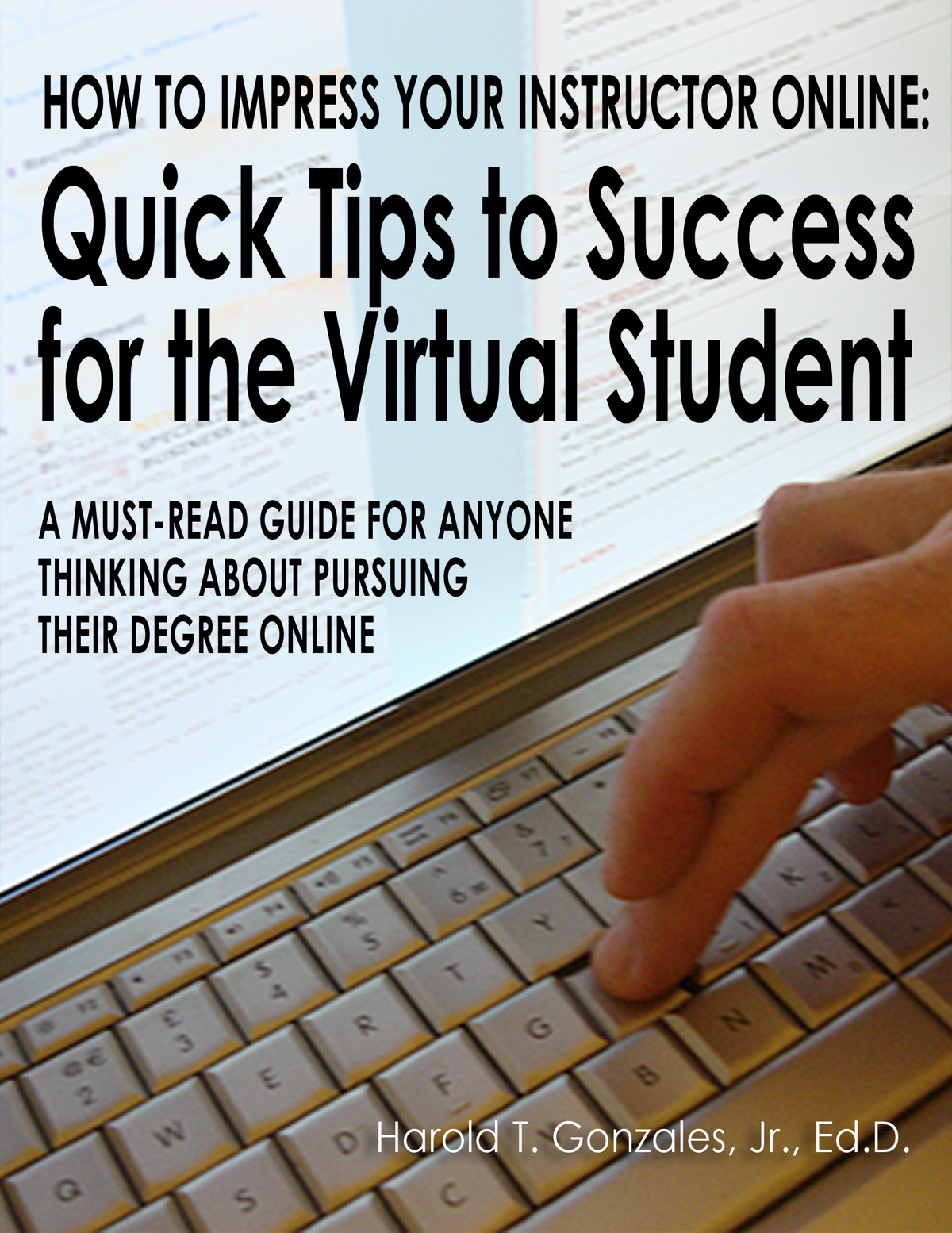
How to Impress Your Instructor Online:  Quick Tips to Success for the Virtual Student A Must-Read Guide For Anyone Thinking About Pursuing Their Degree Online!

How to Impress Your Instructor Online: Quick Tips to Success for the Virtual Student by Harold T. Gonzales, Jr. Ed.D., is the essential resource guide for online students and a must-read for educators working with students in higher education settings. The author offers an overview of the keys to success for the virtual student as they delve into their online learning experience and provides tips to impressing their online instructor. The book covers a broad range of topics including learning styles, time management techniques, online etiquette and communication skills, evaluation, and the challenging problems of plagiarism and cheating. Every stu­dent who is cur­rently tak­ing online courses for credit — or is con­sid­er­ing doing so — should order this no non­sense book for straight facts about par­tic­i­pat­ing in the online edu­ca­tion expe­ri­ence.

Available for $4.99 in eBook format or as a Paperback for $9.99 on Amazon.com.

Free Reader Apps for Mac, PC, IPad and other devices – click here! Also  available at College-Path.com, https://www.college-path.com/college-path-store too! Read reviews and more about the author by clicking here.

Understanding the Federal Work-Study Programs

Will you be working while studying at your college under the Federal Work-Study (FWS) program? Many institutions throughout the United States participate and include FWS programs as a part of the student’s financial aid package.

BEFORE you choose this option, there are some things you need to understand:

1. A Federal Work-Study award may be a job offered on or off campus.

The Federal Work Study Program (FWS) is a federal financial aid job program regulated by the federal government. Colleges can award FWS funds based on financial need as calculated by the U.S. Department of Education from information reported on the student’s Free Application for Federal Student Aid (FAFSA). Read more about FWS by clicking here.

What Post High School Program Makes Sense to You?

Most post-secondary schools can be described as public or private, two-year or four-year.

Public institutions are state supported. Private for-profit institutions are businesses. Private not-for-profit institutions are independent – for instance, the school might have been established by a church or through local community donations rather than by the state government.

Four-year institutions offer bachelor’s degrees, and some offer advanced degrees. Two-year institutions offer associate’s degrees. Less-than-two-year institutions offer training and award certificates of completion. For more information on detailed descriptions of programs, click here.

Is “Senioritis” a Myth?

Is “senioritis” a myth? Every year students across the country struggle with a change in attitude. Many have applied to college and may have been accepted. My recommendation is to beware of the “senior slide.”  High school seniors try to balance responsibilities including academics, extracurricular activities, a social life, college admission, and perhaps a part-time job. Somewhere along the way, homework begins to seem less important. Then they get accepted to college, and after that, high school seems even less important. The students’ grades begin to slide—and so does their motivation.

Read about the danger signs and symptoms of

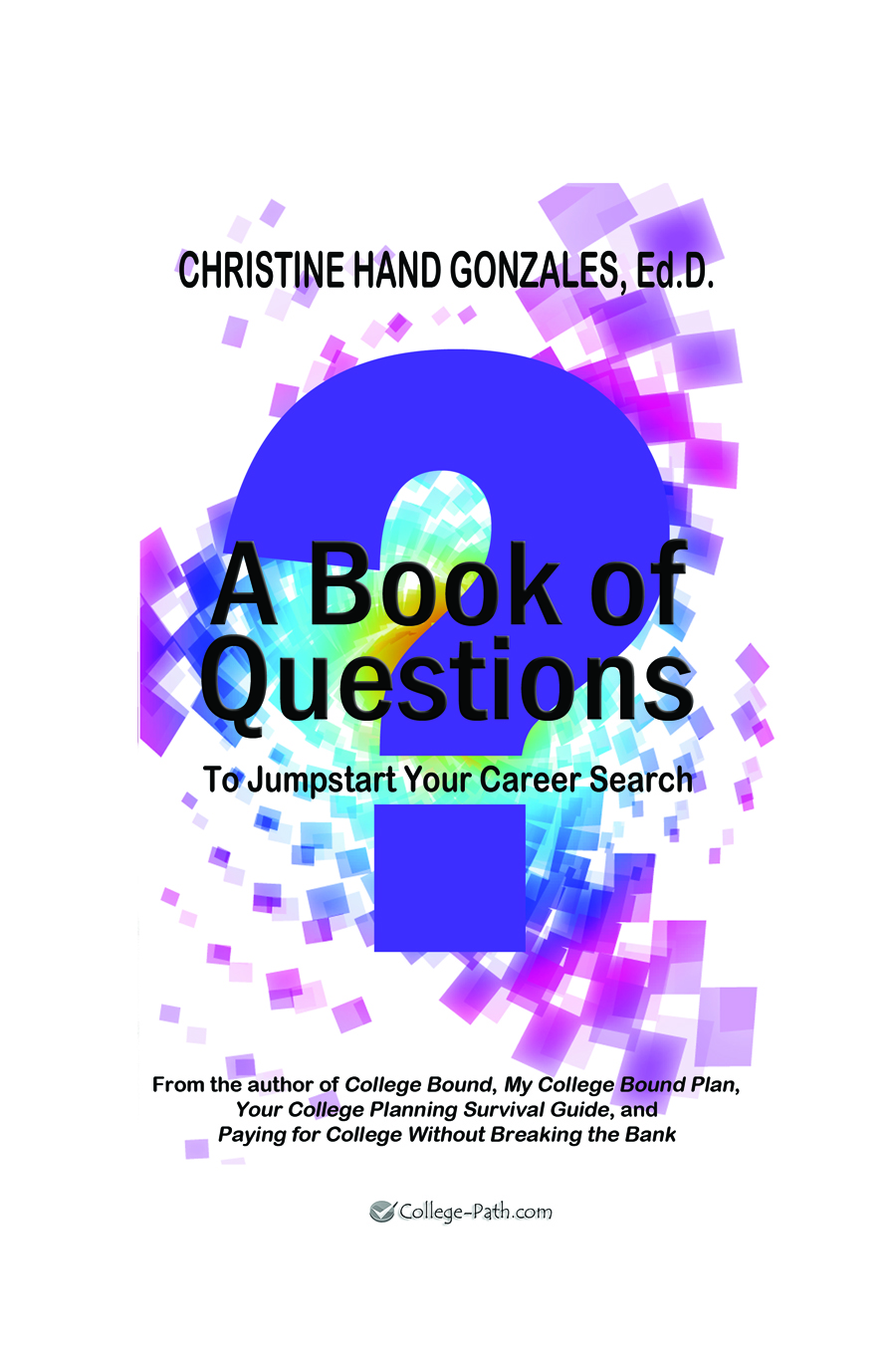
A Book of Questions to Jumpstart Your Career Search – Get It Now!

boq-cvr-half-szLooking for a career and a new job? Need a career change but you don’t know where to start? Are you ready for an encore career? Stuck in a rut?

“A Book of Questions To Jumpstart Your Career Search” was written as a resource to help students, parents, educators, and anyone entering or re-entering the job workforce. This ultimate resource tool is like having a professional career counselor beside you every step of the way. It will make you think about questions that may be important to you in your career search such as: How Do I Get Started? What Do I Do Next? Who Can Help Me? Where Do I Look For Information? What Kind of Training Do I Need? What Questions Do I Ask Before Choosing a Major? What if I Change My Mind About My Career Track? Where Do I Find Reliable Online Resources? This book of questions is meant to be fun and thought provoking. So, discover how you really feel about your interests, skills, talents, and goals in life. One question will lead to another.

Available on Amazon.com and Barnes and Noble.com and the College Path Bookstore – http://tinyurl.com/nevnr5n.

Click here for free down­loads Read­ing Apps from Ama­zon for PC, Mac, iPad, and other devices for Kin­dle Ver­sion. Click here for free down­load Read­ing Apps from Barnes and Noble for PC, Mac, iPad and other devices for Nook Version.


How Many Schools Should You Apply To?

Each individual is unique; therefore, the number of schools the student chooses to apply to will vary. Most students will pare down their foundation list of colleges to the final five to seven schools. There should be a long shot — a stretch school — a reach — a college where the student’s chances of gaining admission are less than 50/50 based upon his or her academic profile when compared to the students the admission office admitted in the previous year.

A reasonable reach — 50/50 or better colleges are likely to admit within the student’s range of grade point average, standardized test scores, and course curriculum. Other factors that could enhance admission status could include activities, an interview, special talents, recommendations, essays, etc.

Likely schools — sure shots —these are colleges where a student is confident that he or she will be admitted. However, be sure it is a school where your academic and personal needs will be met should you enroll.

The best way to create this list is to research colleges by visiting the campus, taking tours, and speaking with admissions representatives. Review what is required to apply to the colleges including grade point average, high school course requirements, standardized test scores, Resume of activities, essays, and recommendations.