STAY ORGANIZED WITH THIS COMPANION WORKBOOK TO “COLLEGE BOUND” INTERACTIVE GUIDE
“My College Bound Plan” by Christine M. Hand Gonzales, Ed.D.
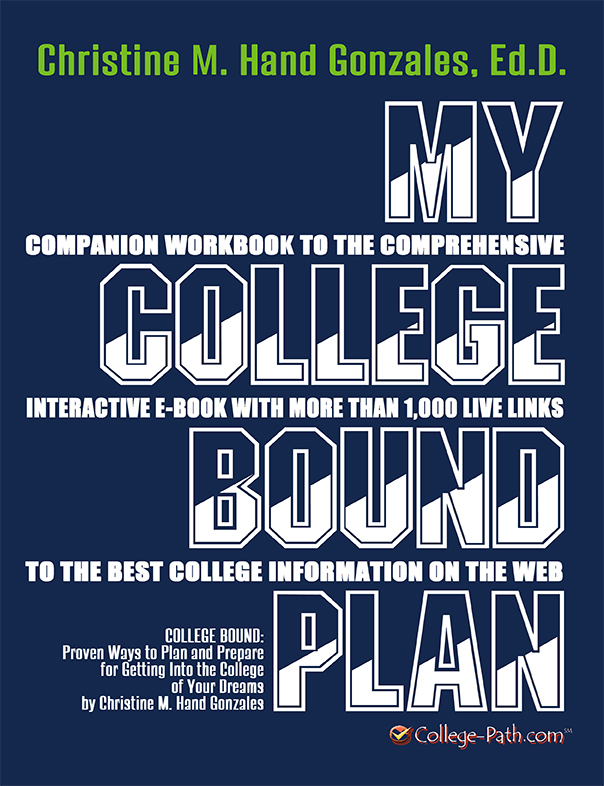 A complete companion workbook to the College Bound interactive e-book with all the forms and checklists found in College Bound ready to use.
Now available in paperback on Amazon for $14.95 – great for keeping notes on your college plan – just click here!
Reviews:
“College Bound has everything! The first place I went was how to figure out what to major in. The links to O*NET and the career and major profiles really helped. Then I used the link to College Navigator to match majors with colleges. Testing, essay ideas, asking for letters of recommendation, and finding money are all important topics to me. There’s so much in this book. No matter what I needed, I found it in College Bound! There’s nothing else like it – and I know it helped me get into USC.” Jessica – University of South Carolina Freshman
“College Bound is awesome! I began my search for a college my junior year when I was interested in playing sports at the Division II or III level and Dr. Chris’s book helped a lot. The step-by-step instructions made the process for a student-athlete easy to understand. It also answered all my other questions about visits, the interviews, and the application process. Thanks, Dr. Chris!” Brian, High School Senior – Connecticut!–more– Read more reviews – click here.
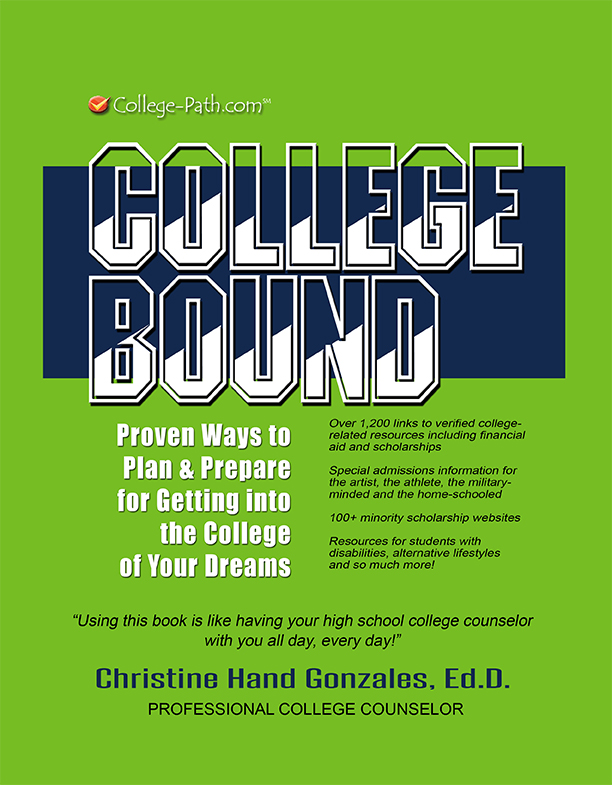 “College Bound has been an amazing resource for our family! With one child in college and another who will graduate in two years, this book is a wealth of information! We are using it to help our daughter prepare for getting into the right school, and we’re using it to find additional financing for our son. I would have loved to have this book when he was in high school.” RM, Mother to a High School Junior and College Sophomore
“College Bound has been an amazing resource for our family! With one child in college and another who will graduate in two years, this book is a wealth of information! We are using it to help our daughter prepare for getting into the right school, and we’re using it to find additional financing for our son. I would have loved to have this book when he was in high school.” RM, Mother to a High School Junior and College Sophomore
“As a high school college counselor and a private consultant, ‘College Bound’ and the My College Bound Plan workbook have become essential tools in working with my students. The step by step process details every piece of important information needed to for your student to be successful in the college search and with the challenge of applications. I use the workbook with my students and have College Bound on my iPad as an instant resource. I have recommended both of these books to my students and their parents.” Christine Carriuolo, M.S., College Counselor
For “College Bound” in eBook or paperback, click here!